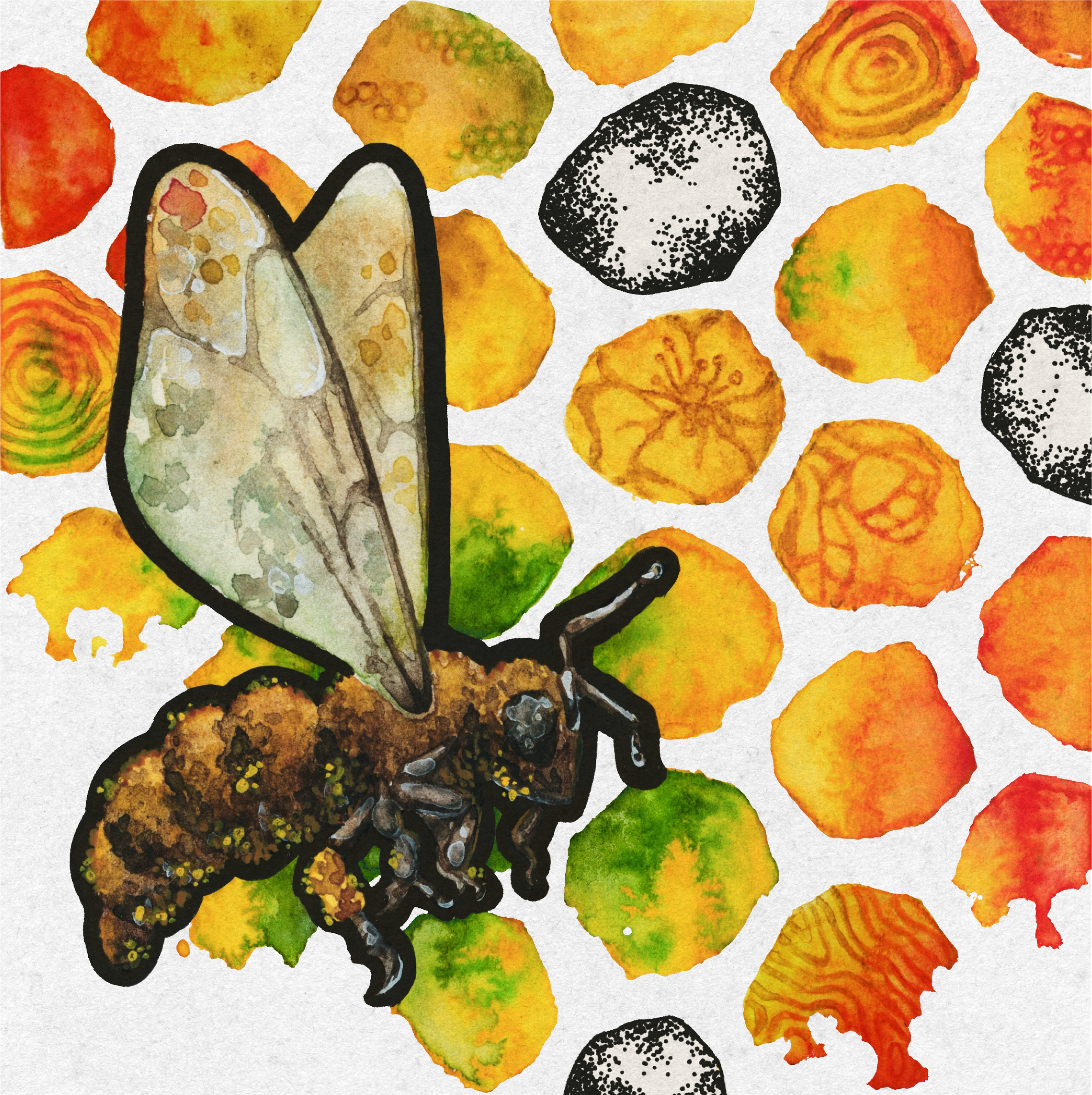
THE BEES
Two colonies in the lower field
Two honeybee colonies were installed in the orchard's lower field on May 23, 2026. They forage on clover and wild plants in the surrounding fields, and next spring they will work the apple bloom.
The hives are kept with Harp Apiculture, organic and biodynamic beekeepers in the Hudson Valley, led by Chris Harp with 36 years at the hive.

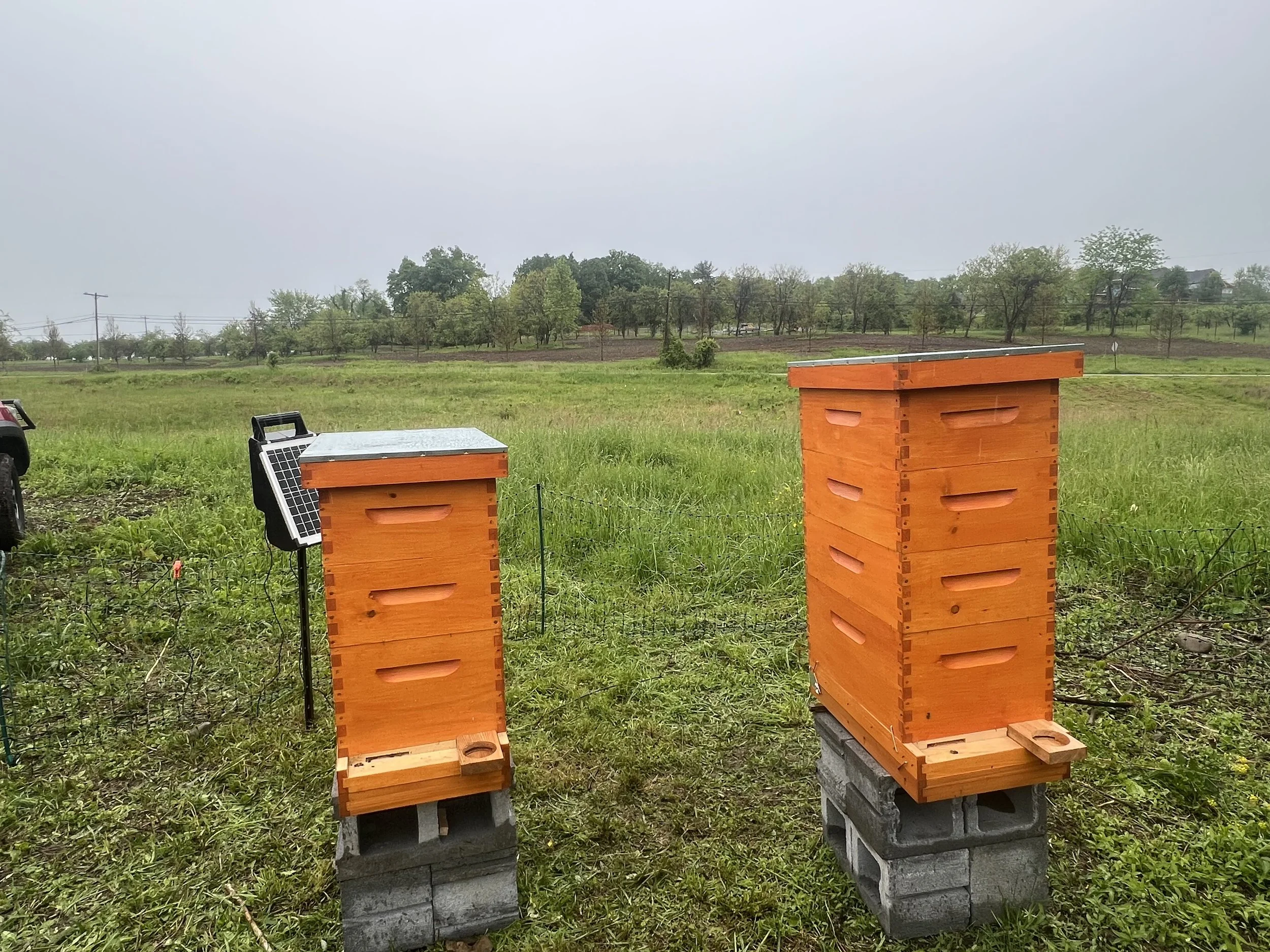
The apiary in the lower field, inside its bear fence, summer 2026
THE APIARY
- Colonies
- 2
- Installed
- May 23, 2026
- Location
- The lower field of the orchard
- Hives
- 8-frame, a deep brood box with medium supers
- Queens
- Both 2026 queens, marked white
- Beekeepers
- Harp Apiculture: Chris Harp and Holly
- Forage
- Clover, the surrounding fields, apple bloom from 2027
- Protection
- Solar-powered electric bear fence
- First Honey
- When the colonies can spare it
THE FIRST SEASON
Notes from the hive inspections, 2026
Two hives installed in the lower field, inside an electric bear fence.
Both colonies strong. A new super added to the left hive; the right hive’s queen found and marked.
Both queens seen at work. The left-hive queen is among the quickest layers our beekeepers have seen.
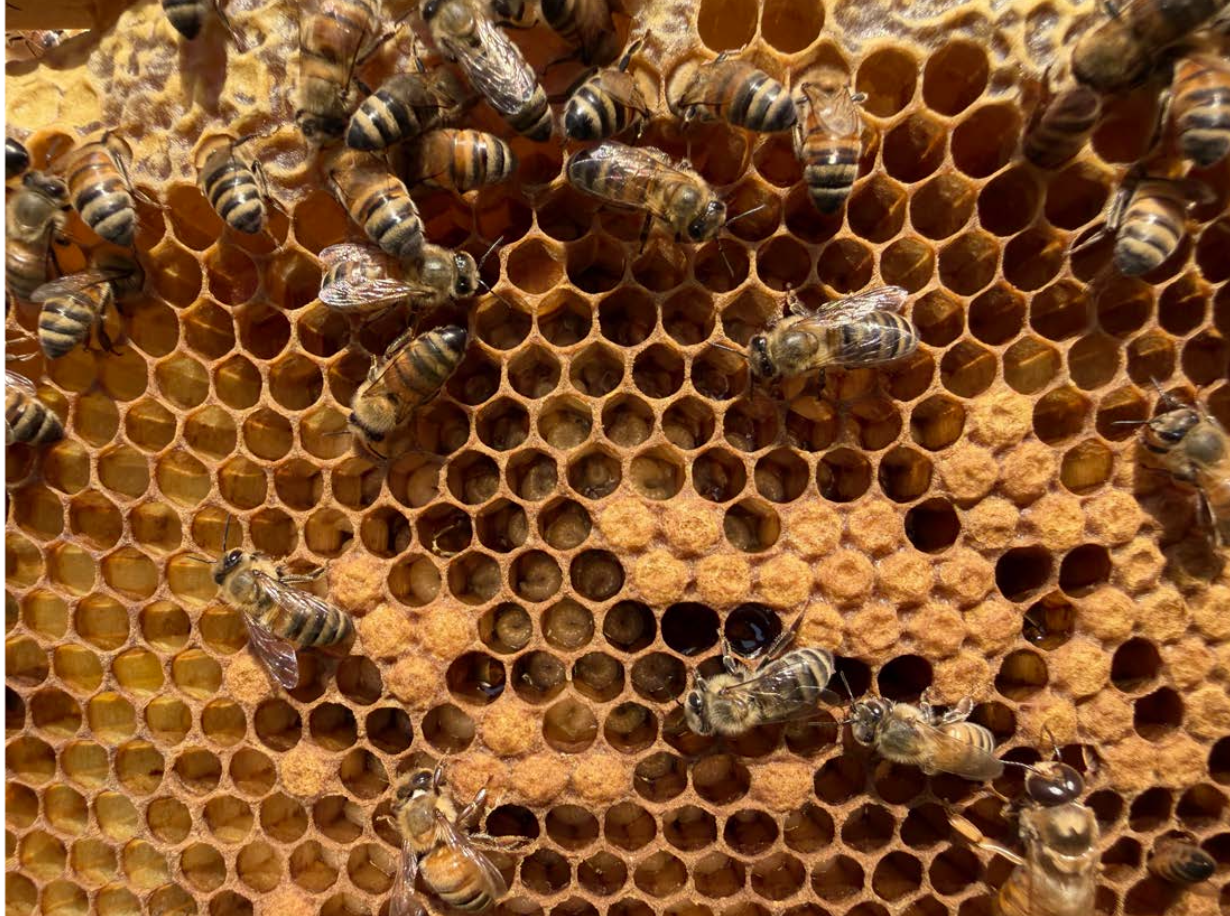
Good brood patterns in both hives. Frames of drawn comb added to help the colonies grow and store honey for winter.
Treatments against Varroa mites ahead of winter, with a full inspection to follow.
THE BEEKEEPING YEAR
How the colonies are kept through the seasons
SPRING
MARCH TO MAYColonies build up as the orchard blooms. New colonies are installed, fed microbials and bee tea, and given room to grow.
SUMMER
JUNE TO AUGUSTSupers are added as the bees draw comb. Mites are watched on each hive’s observation board and treated with oxalic acid.
AUTUMN
SEPTEMBER TO NOVEMBERStores are weighed against the winter ahead; honey stays in the hive first. Hives are insulated in November.
WINTER
DECEMBER TO FEBRUARYThe bees cluster on their stores, fed high-nutrient winter patties until the first nectar flows of spring.
POLLINATION
Most apples cannot set fruit with their own pollen. Each blossom needs pollen from a different, compatible variety flowering at the same time, and bees are how it travels from tree to tree.
That is why an orchard of many varieties suits bees so well, and why the crabapples are there: Manchurian and Robert’s Crab bloom heavily and carry pollen across the whole collection.
SEE THE APPLES →